
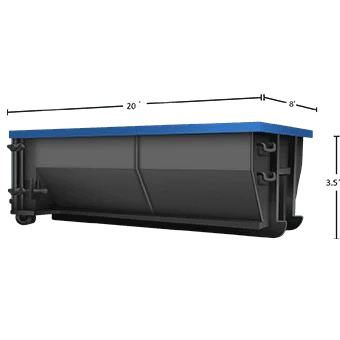
A removable container with provider-handled transport
A roll-off is a removable waste container placed at the agreed site position by a handling vehicle and recovered when the accepted load is ready. It can remain while the project is loaded over the agreed period. The space occupied by the box is not the whole operating area: the provider also needs a suitable approach and room for placing and retrieving it.
Describe whether the project has one load or may need successive loads, along with the materials and expected loading period. Ask for the actual container, permitted loading method and complete delivery, hire and disposal-collection scope. A later exchange or move needs an agreed provider visit; do not tow, drag or relocate the container yourself.
Confirm the actual container and loading method
A roll-off container may fit in the proposed space while leaving its intended loading side unusable. Explain how people will place material into it before agreeing where the container should sit.
Describe the material, expected volume and who will load it. Ask whether the offered container has a loading door, where that door is and how the provider permits it to be used. Do not assume every container opens in the same way or that a door is included.
If you intend to carry material through an opening, explain that at enquiry stage. Ask the provider to assess whether the actual container and proposed position support that method. Do not improvise a loading method or alter door hardware when the offered arrangement differs from what you expected.
Keep the working side available
Show the proposed position in relation to walls, parked vehicles, fences and other stored items. The discussion should include space needed to operate an approved loading door and the route people use while loading, as well as the body of the container.
Confirm property permission and have the provider assess the surface, delivery approach and required handling space. Keep people out of vehicle handling areas during delivery or removal. A position that supports loading must also remain reachable for the provider to collect the container.
Apply the material and loading terms throughout use
Ask which materials are accepted, which need another disposal arrangement and what weight, fill and loading restrictions apply. The ability to bring an item through a door does not establish that the item may be put in the container.
Keep the agreed loading route free as work progresses, and follow the provider’s instructions for the door and load condition. Report damage or a door problem instead of forcing a mechanism or continuing with an uncertain setup. Do not relocate the container yourself.
Match the quote and collection plan to the work
Request the proposed container, rental dates, included handling, disposal and weight terms, and any extra charges in the quotation. State any dependency on a loading door so it can be confirmed against the actual equipment before delivery.
Agree how to request collection and the required condition of the load and access at that time. Toilets and washing for the loading crew are a separate need; arrange their equipment and care without treating sanitation waste or used washing water as ordinary container material.
Questions before you book
Is a position suitable if the container footprint fits?
The provider also needs to assess delivery and collection access and the proposed loading method. If a door will be used, confirm the actual door arrangement and the space it needs.
Can any bulky item go in if it passes through the loading door?
No. Confirm accepted materials, size or handling restrictions and weight and fill terms separately. Door access is not disposal permission.